

In the era of digital transformation, as customer interactions with brands increasingly move online and onto mobile, sound is joining the core building blocks of brand identity and effective marketing communication. The banking sector, traditionally seen as conservative, is waking up to this potential too - in a world where you only get one shot at a first impression and every moment of customer attention is contested, banks are increasingly realizing that communication isn't just what people see, but also what they hear. After all, sound and music - so often the unsung supporting cast - hold enormous power to shape brand perception, build trust and - let's be honest - influence purchase decisions.
Considering that the right soundtrack can calm customers waiting in line, convey solidity in a TV spot, or add energy to a mobile app, sound looks like the next strategic tool no customer-facing industry can afford to ignore. But can deliberately weaving sound into the communication strategy of brands in this sector actually deliver measurable results in banking - where trust, security, and modernity are currencies every bit as precious as gold?
The role of sound in building trust and security
Banks - both globally and in the Polish market - are using strategically designed sound, to varying degrees, to genuinely strengthen their brand, improve customer communication, and gain a competitive edge. In the financial sector, trust is an exceptionally valuable currency. In digital environments, where there is no face-to-face contact with a bank employee, sound can act as a signal confirming that a transaction is safe and successful.
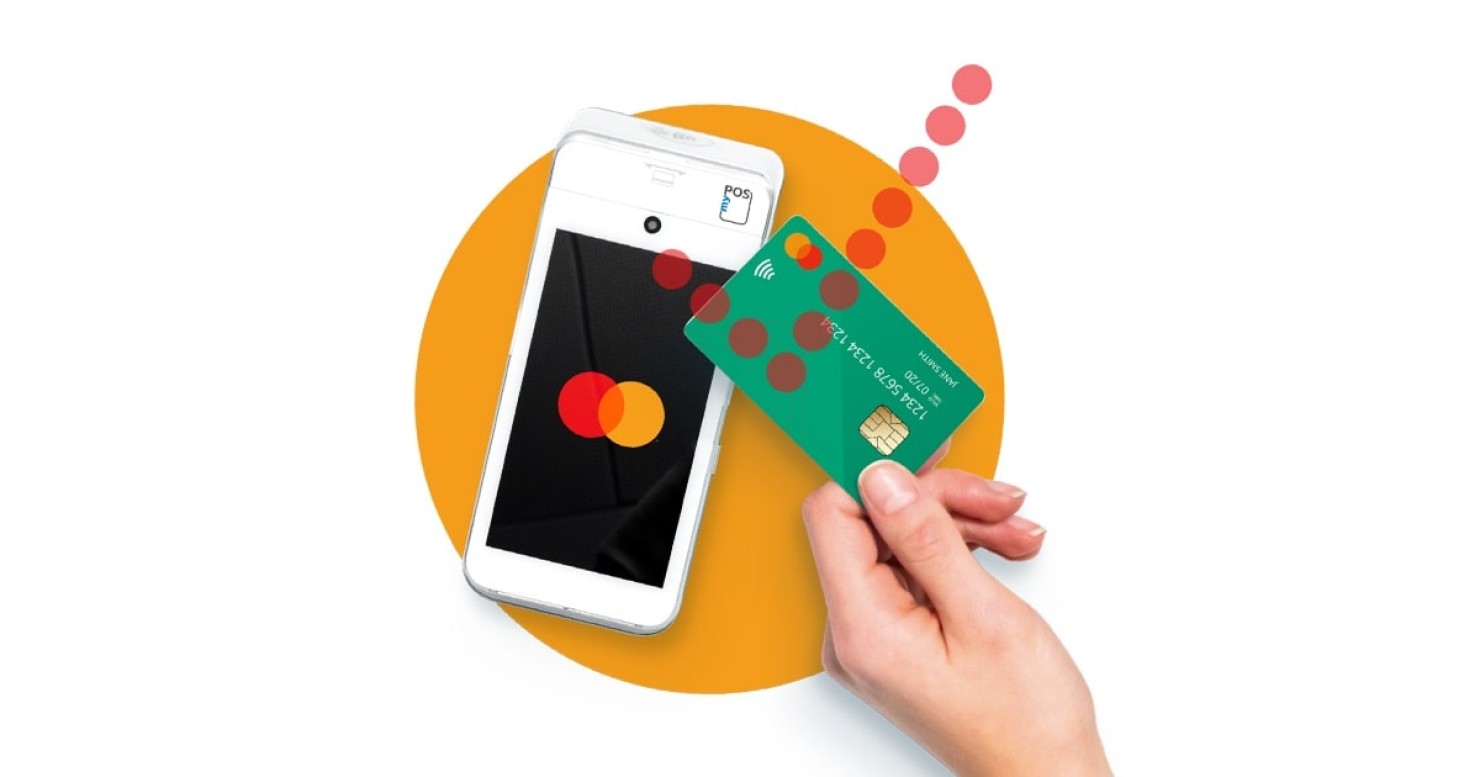
Mastercard research found that 77% of customers feel that sound accompanying a transaction makes it - and the retail environment - more trustworthy. An audio payment confirmation can ease the anxiety of paying online; according to other Mastercard research, 1 in 5 shoppers abandons checkout over security concerns, while introducing an audible transaction confirmation (the so-called "checkout sound") boosted feelings of security and trust by 3.4x. Similarly, Visa research shows that customers who experienced sensory branding (including sound) at the point of sale were 12% more likely to say the merchant cares about their security, and positive perception of the Visa brand rose by 14%.
The key to a better customer experience
The world of finance may run on numbers and regulations, but it is also a world of emotions. Financial decisions, however hard we try to rationalize them, are often driven by intuition and gut feeling. Sound and music are powerful tools that can shape those feelings, build trust, and set a brand apart from the competition. This isn't just marketing intuition - research in behavioral economics and neuromarketing consistently backs it up. The work of Daniel Kahneman, Nobel laureate in economics, showed how our two modes of thinking - the fast, intuitive, emotional System 1 and the slower, analytical System 2 - shape our decisions, financial ones included. It turns out that System 1, highly susceptible to sensory and emotional cues, often takes the wheel even when we believe we are acting perfectly rationally.
In this context, the right music or sound at a banking touchpoint (whether in a branch, in a mobile app, or while on hold with the call center) can significantly influence a customer's emotional state. Sensory marketing research has repeatedly shown that pleasant auditory stimuli can reduce perceived stress, shorten subjective waiting time, and improve overall ratings of service quality. In banking, where conversations may involve sensitive data or major decisions (a mortgage, say), creating an atmosphere of calm and professionalism through sound can translate into greater customer trust and loyalty. Skillfully managing this "emotional backdrop" is exactly what becomes the key to building positive, long-term relationships.
Case studies: global leaders in banking audio branding
Across the global financial sector, there is a clear surge of interest in audio branding, driven by several key factors. Financial institutions increasingly recognize that sound can humanize a brand, elevate the user experience (UX), and set it apart from the competition, especially as impersonal interactions keep multiplying.
Companies like Mastercard, Visa, U.S. Bank, and HSBC have invested in sophisticated sound systems that support their business goals and forge stronger bonds with customers.
HSBC, as part of its 2018 visual identity refresh, chose to create a brand anthem rather than a short sonic logo, teaming up with renowned composer Jean-Michel Jarre. The instrumental piece is meant to reflect the bank's motto, "Together we thrive." Multiple versions were produced for use in branches and at sponsored events. To ensure global consistency, HSBC set up a "creative council" made up of creative directors from partner agencies and internal digital creative leaders.
One intriguing HSBC initiative was the "Sounds of Home" campaign, aimed at international students. Responding to research showing that what students miss most are the sounds of home, the bank enlisted influencers to collect those sounds and turn them into soundscapes available online. The campaign (172 million media reach, 86,000 engagements on influencer posts) shows how sound can be used to build deeper, emotional bonds with customers, reaching beyond traditional financial products - with marketing that speaks to experiences, not products.
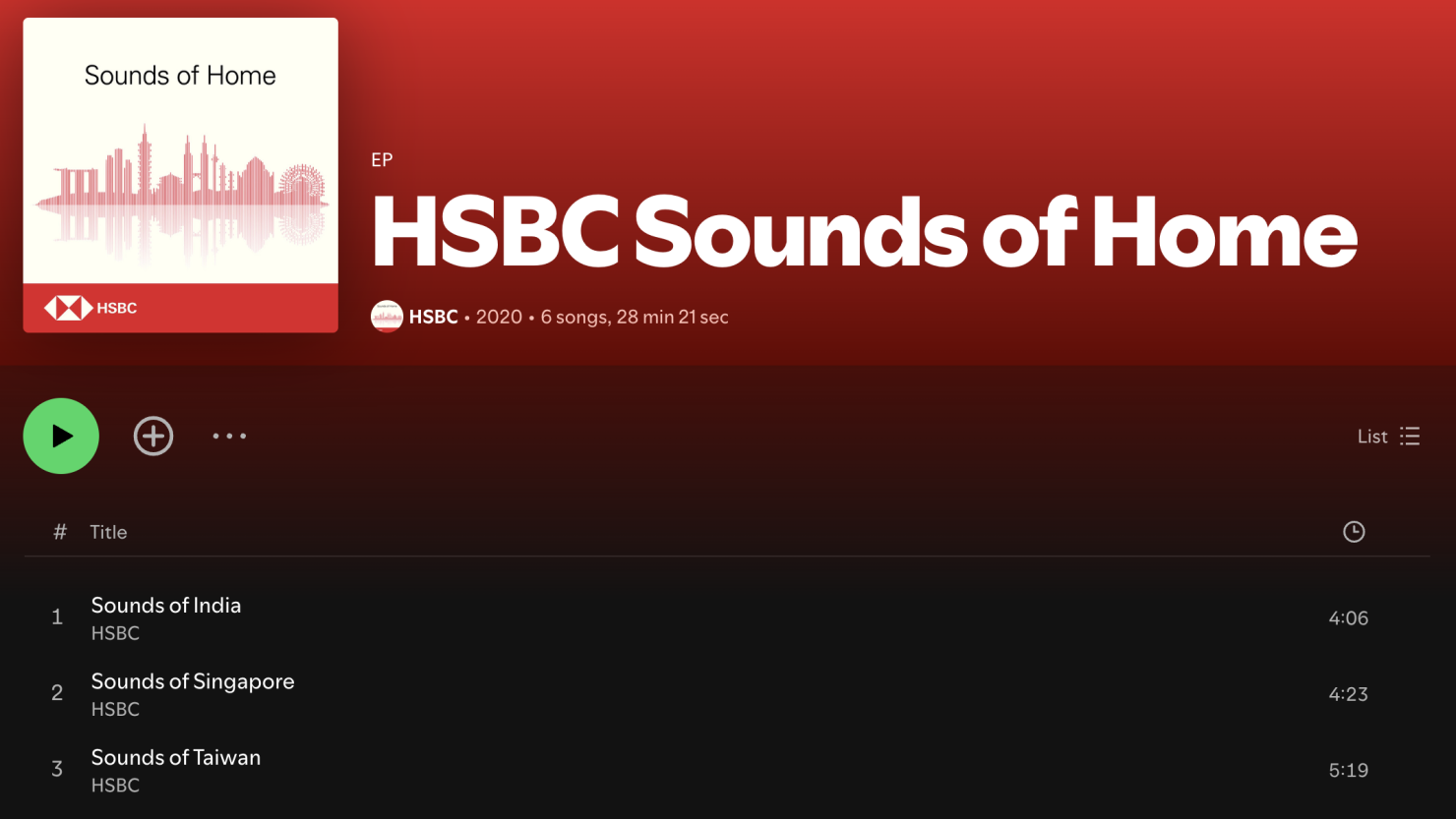
U.S. Bank is another financial institution that has rolled out a holistic audio branding system. The bank refreshed its existing sonic logo (mnemonic) and expanded it into a comprehensive system spanning multiple touchpoints - from mobile banking to omnichannel marketing campaigns. The new sonic logo comes in several versions (instrumental, vocal, a cappella) tailored to the context of use, which improved alignment with brand attributes and boosted its recognizability without any additional cues. The bank also developed a system of UX sounds (earcons) supporting voice interactions, payment transactions, security features, and notifications.
Looking at these examples, one thing is clear: global leaders treat audio branding as a strategic investment. Their success comes not merely from owning a sonic logo, but from consistently executing a coherent sound strategy across every possible customer touchpoint - from transactions and mobile apps to marketing campaigns and community-building initiatives. This holistic approach, often grounded in research and adapted to local markets, is the key to building a strong, recognizable sonic brand.
Do Polish banks hear the potential of sound?
Take a stroll through the soundscape of Polish banking and you get the impression we are somewhere at the halfway point when it comes to understanding the role of sound in marketing. On the one hand, ad campaigns feature quite a few distinctive sonic cues that can drill their way into memory rather effectively - provided they are implemented consistently over the years. Proof that the potential is being recognized, at least in traditional channels like radio and TV.
Beyond the world of advertising, however, things get noticeably quieter.
Sound in mobile apps and online banking
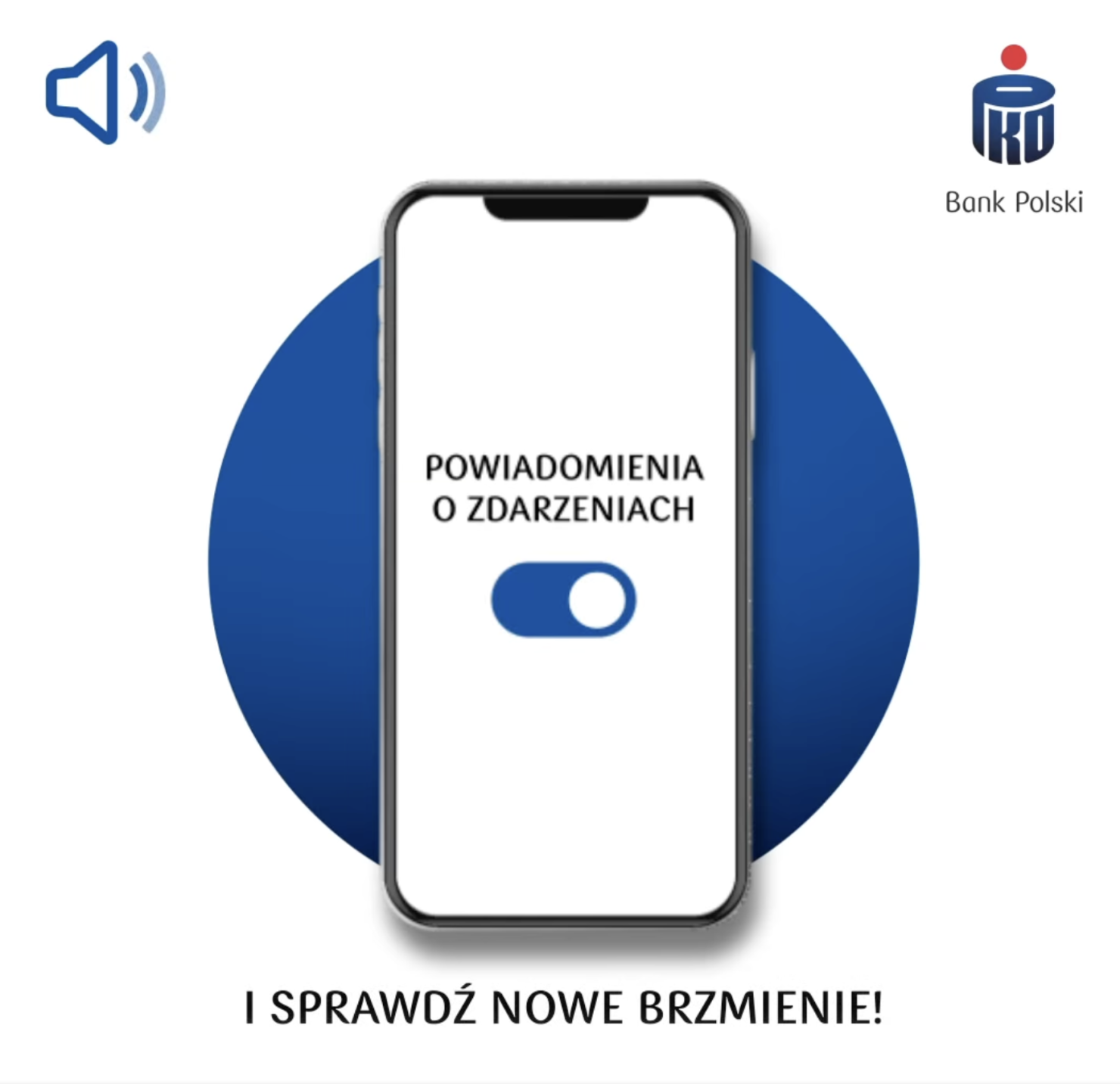
Here, sonic asceticism often reigns. Yes, there are transaction notifications, but they are rarely consistent with the brand's audio identity. PKO Bank Polski - Poland's largest bank - introduced a short audio signal for push notifications in the IKO mobile app, described as part of the bank's new marketing strategy. The bank is also developing voice-based services such as the IKO Voice Assistant. There is, however, no sign of a comprehensive audio branding system covering all touchpoints.
What banking apps are missing are subtle yet distinctive sounds confirming operations - sounds that could build a sense of security and satisfaction. Imagine a gentle, satisfying "success" chime after completing a transfer, unique to that particular bank - a small thing, yet it delights and builds the experience.
And this isn't merely a matter of aesthetics or a fleeting moment of user "joy." Well-designed UX sounds serve critical functions, as research confirms.
Sound can reduce cognitive load and improve usability
Sounds in banking apps can take the load off the eyes, confirming actions without forcing users to visually hunt for a message - a real help when screens are dense with data. In line with the principles of multimodal design, this supports usability. Stephen Brewster (University of Glasgow) emphasized that well-designed sound significantly improves interface usability, reducing visual load and user error rates by providing clear, alternative feedback signals. His research on "earcons" (audio icons) proved that properly constructed, non-irritating sounds can effectively streamline navigation, clarify system status, and enable more efficient interaction in mobile and "eyes-free" contexts. What's more, his work consistently highlights that the synergy of sound with other modalities, such as haptics, within multimodal interactions compounds the benefits for users, increasing their engagement and overall satisfaction.
The distinctive power of sound in brand building
Sound has a remarkable distinctive power - it can make a brand stand out in a thicket of messages and lodge itself permanently in the audience's mind, building a unique character. This isn't only about subtle in-app sounds, but also about bolder signals such as the audio logo - a brand's sonic signature. In Poland, such solutions - often short jingles or musical motifs closing out TV spots - are relatively popular in the financial sector, which shows their potential is being noticed. Just think of the distinctive few-second sonic logo that has accompanied ING Bank Śląski campaigns for years - building the bank's strong recognizability - or Mastercard's short, functional, and instantly recognized sonic cue, which has become its audio calling card at card transactions.
Other financial institutions, too, often cap their commercials with signature musical motifs, hoping to anchor themselves in customers' memory. For such a sonic signature to reach its full potential, however, it must above all be perfectly matched to the brand's character and consistent with its overall identity, resonating with its values and message. What's more, it should be an integral part of a well-thought-out brand sound system, rather than a single, disconnected element - and, crucially, it must be used consistently across every possible customer touchpoint - from ads through apps to the call center - building unambiguous, powerful associations.
Sounds, music… and the brand's voice
Taking a comprehensive approach to a bank's sonic identity means remembering that the audio layer is far more than music or system sounds - it is also the voice in customer service systems (IVR and voicebots), which serves as a calling card for the brand. It is often that voice that carries the dialogue with the customer, makes the first impression on the phone, and welcomes viewers in video content. It should be professional, empathetic, and consistent with the brand's personality.
Research in the psychology of perception and branding - including studies on how paralanguage (vocal traits such as tone, pace, and intonation) shapes the way a message lands - indicates that consistent use of the same voice can significantly increase brand recognition and build a sense of familiarity - and with it, trust and the perceptual coherence of the brand. A voice, much like a visual or sonic logo, becomes a key builder of brand equity when used strategically and consistently. It then becomes an integral part of the brand's personality, giving it a human dimension.
An interesting and effective approach is working with a brand ambassador who lends not only their image but also becomes the institution's signature voice, as with Bank Millennium and Radek Kotarski (joined this year by Maciek Musiał), or ING Bank Śląski's long-running, now-iconic collaboration with Marek Kondrat. When leveraging familiar, well-liked voices, authenticity and fit are paramount. Get those right, and the synergy can pay off for years. The brand not only gains a unique, consistently sounding, instantly recognizable voice, but also - and in the financial industry this is priceless - takes on a more human, approachable, and credible face, fostering deeper relationships and lasting trust.
Technology and the future of sound in banking
Rapid technological progress will undoubtedly shape future trends in how the banking sector uses sound, opening the door to innovations that go well beyond today's playbook. A prime example is fast-evolving voice biometrics, which - thanks to the uniqueness of the human voice - is becoming an increasingly popular tool for identity verification. It works by analyzing more than a hundred unique physical and behavioral vocal traits, from the structure of the larynx and nasal passages to speaking pace and accent, creating a distinctive "voiceprint" for each user. Its potential is enormous: from safer, more convenient logins, through authorizing transactions with voice commands, to personalizing and streamlining call center service, where the system can identify a customer in an instant.
Global financial institutions such as HSBC, Barclays, and National Australia Bank have already begun successfully piloting and deploying voice biometrics, cutting verification times and raising security levels.
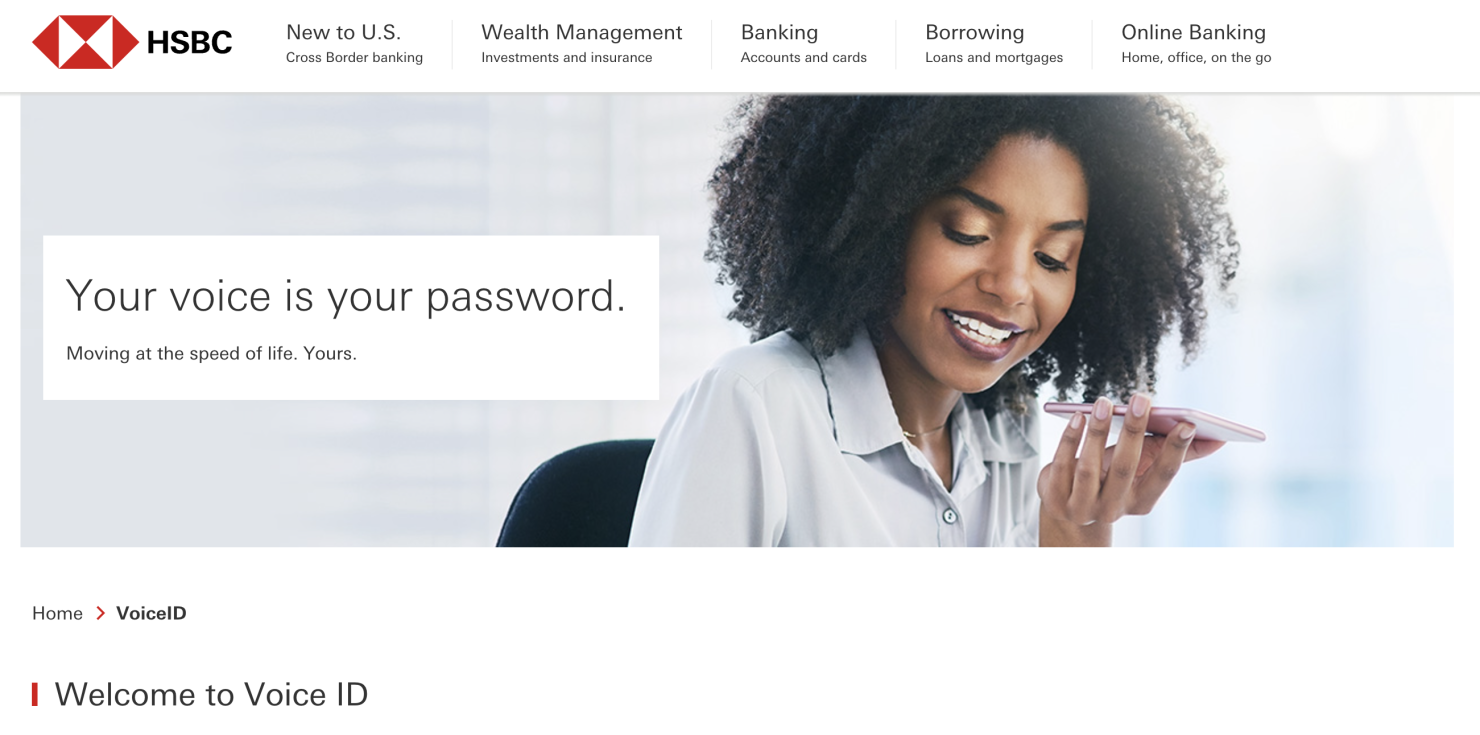
In Poland's banking sector the technology is still in the early stages of adoption (with some deployments, for example on customer helplines, as in the past at Santander Bank Polska), but as artificial intelligence matures, voice biometrics will offer an even higher level of security and more natural interactions, revolutionizing the way customers engage with their finances.
Biometrics has the potential to revolutionize how customers interact with banks, offering greater convenience and speed - yet, as with any new technology, getting the safeguards right is critical, especially given the risk posed by another rapidly advancing technology: voice cloning. That risk, however, is not going unanswered.
The "voiceprint" used by banks deploying voice biometrics analyzes more than a hundred unique physical and behavioral traits, making it very difficult to forge. On top of that, banks apply liveness detection, which distinguishes a live voice from a recording, and multi-factor authentication, pairing biometrics with other methods such as a PIN or password. What's more, the algorithms are continuously refined to withstand new forms of attack, including voice cloning. To earn users' full trust, it will certainly take relentless, ongoing attention to security, including research into resistance to voice-generation attacks and the introduction of regulations and standards that help protect biometric data.
The bottom line
Audio branding in the Polish banking sector appears to be at an earlier stage of development than among the global leaders. While some banks are active in this space, their efforts tend to be tactical (music in ad campaigns, say) rather than strategic and grounded in a comprehensive sonic identity system. One-off initiatives dominate, usually tied to specific ad campaigns or app features. There are no examples of banks communicating that they own - and consistently deploy - a deliberate, end-to-end sound system on par with the global leaders. That said, the first signs of growing interest in the topic are emerging.
This creates a significant opportunity for Polish banks. Learning from the experience of international pioneers, they can skip whole stages of evolution and implement modern, holistic audio branding solutions right away. There is major potential in:
-
Creating unique sonic logos and a brand music core - sonic themes that build recognition and set the brand apart from the competition.
-
Designing UX/UI sounds for popular banking apps that not only improve usability but also reinforce brand identity and a sense of security.
-
Exploring the possibilities of voice technologies (assistants, biometrics) in ways that build trust and deliver real value to customers.
-
Using audio content marketing (e.g. podcasts, themed playlists) to drive engagement and position the brand as an expert.
Polish banks still have plenty of room to shine here. Rather than treating audio branding as an add-on, it is worth weaving it into the brand's strategic DNA, so that it works for the brand over the long haul - driving awareness, deepening trust, and building consumer loyalty. What will matter most is that decision-makers at banks understand the strategic role of sound and are ready to invest in professional solutions that go beyond ad-hoc marketing needs.
Sources:
https://dlmdd.com/article/sonic-branding-in-finance/
Kahneman, D. (2011). Thinking, fast and slow.
https://en.media.pkobp.pl/111374-5millioniko-in-pko-bank-polski
The Importance Of Consistency In Branding" (Forbes Communications Council, 2024)